Asian American and Pacific Islander students are often underrepresented in special education services. When they do receive support, it usually comes much later than for their peers, according to research cited by contributors Alex Jiao, Eileen Wu, Linfeng Chen, Lanlan Xu, Julie Yang, and Chao Wu. Cultural competence training for teachers and staff can help school leaders recognize how stigma and cultural differences shape family decisions about disability and build trust with communities that may be hesitant to engage.
January 19, 2026
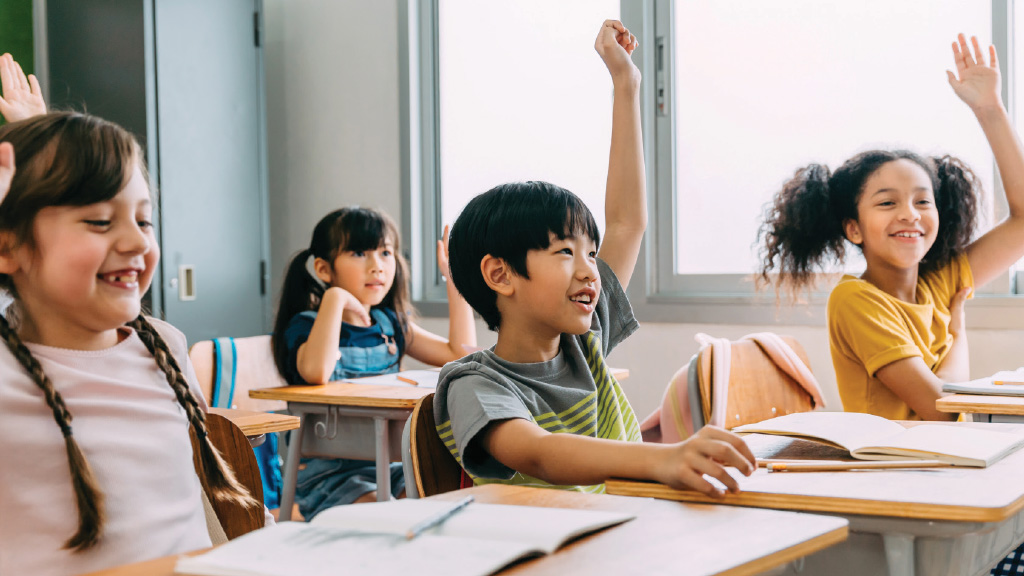
PHOTO CREDIT: TWINSTERPHOTO/STOCK.ADOBE.COM
For decades, research has shown that students of color are often overrepresented in special education services. But newer studies reveal a different story for Asian American and Pacific Islander (AAPI) students: They are more frequently underrepresented—and when they do receive support, it usually comes far later than for their peers, according to the 2020 report “Making Visible the Invisible: Multistudy Investigation of Disproportionate Special Education Identification of U.S. Asian American and Pacific Islander Students” by Amanda L. Sullivan, Tara Kulkarni, and Vichet Chhuon.
Several factors are at play here. On a systemic level, the lack of nuanced data about special education access has prevented schools and policymakers from recognizing the problem. Recently, a longitudinal study of over 42,000 kindergartners across 10 cohorts found that most AAPI student groups accessed special education services at a lower rate than their peers and, crucially, received these services later in their education. However, historically, the absence of data related to AAPI students allowed this pattern to remain invisible. Even today, research gaps persist, leaving educators and policymakers unaware of the underservice many AAPI students experience.
But these data only scratch the surface. The deeper story lies in how disability and differences are understood within AAPI families, and how those perceptions intersect with systemic barriers. As Rooshey Hasnain, a disability researcher and the project director of the Asians with Disabilities Outreach Project Think-Tank, explained to NBC News, “A lot of it is intergenerational, it’s terminology and how disability is viewed in terms of that individual and that family and what community they come from.” For many families, concepts like learning disability or special education fail to translate neatly across cultures. What schools classify as a disability may be seen as a personal failing, a source of shame, and even something to be hidden or ignored.
Shame and stigma play a large role. In some AAPI cultures, disability is viewed as a reflection not just on the individual, but on the family. Seeking special education services may feel like admitting a flaw that disrupts the family’s standing within their community. Combine that with the pressuring weight of the “model minority myth”—the idea that Asian Americans are universally high-achieving and self-sufficient—and this perception is a potent force discouraging families from pursuing evaluations or accommodations.
These challenges are compounded by language barriers for some families. As Ann Hu, who has a child with dyslexia, put it, “It will always take twice as long to understand the systems here than for the people who are born here.” Special education law, evaluations, and individualized education programs (IEPs) are complex structures and processes, with specialized terminology that is difficult to understand even with translators. Families already juggling many other pressures may not be able to advocate or ask for adequate special education service for their children.
The consequences of these barriers are profound. When AAPI students go undiagnosed or are diagnosed late, they miss years of federally guaranteed services that could make a critical difference in their academic and social development. The cost is not just educational but emotional: Students may internalize failure, lose confidence, and disengage from school. Meanwhile, families are left feeling isolated and unsupported, believing they are alone in their struggles when in fact the problem is systemic.
What can be done? First, schools and policymakers must recognize this underservice issue for AAPI students. Second, educators should receive cultural competence training because teachers and school staff must learn to recognize how stigma and cultural differences shape family decisions around disability, and how to build trust with communities who may be hesitant to engage. Third, schools must invest in high-quality language access—not just interpreters, but culturally informed translations of materials that align with families’ lived experiences.
Finally, there needs to be a broader cultural shift in how disability is understood. For too long, disability has been framed as a deficit, a problem that is not unique to the AAPI community. Disability must be reframed as difference, a call for understanding and support, not a source of shame.
Community-based programs such as the Chinese American Parent Association’s Special Education Equal Development Society (CAPA-SEEDS) in both Maryland’s Howard and Montgomery counties and BranchOut’s Howard County Chapter are helping lead this change. They’re creating inclusive, culturally responsive spaces where families and students can learn, connect, and grow together. CAPA-SEEDS empowers parents to see special education as a right and a pathway to success, while BranchOut! engages AAPI tutors to mentor students with autism across all backgrounds, promoting empathy and inclusion. With sustained support, these initiatives can continue transforming community attitudes and ensuring that every family feels confident seeking the services their children deserve.
Together, educators, policymakers, and communities must take coordinated action—by improving data and identification practices, strengthening cultural competence, expanding language access, and supporting community partnerships—to close this invisible gap and ensure that every AAPI student receives the understanding, services, and opportunities they deserve.
AUTHORS: Alex Jiao, 11th grade; Eileen Wu, 10th grade; Linfeng Chen (linfeng.chen@gmail.com), Howard County Board of Education, Maryland; Lanlan Xu (lanlanxu@hotmail.com), inaugural chair, Howard County AAPI Commission, Maryland; Julie Yang (yangjuli70@gmail.com), Montgomery County Board of Education, Maryland; and Chao Wu (chaowu2016@gmail.com), Maryland House of Delegates, District 9A, Maryland.