CUBE Annual keynote speaker: School boards play a critical role in prioritizing literacy.
Poor reading skills are not only a classroom failure; they are one of the clearest measures of whether a public education system delivers excellence for all its children, says literacy activist Kareem Weaver. The ability to read confidently and proficiently, he tells ASBJ's Michelle Healy, "is our greatest civil right."
September 15, 2026
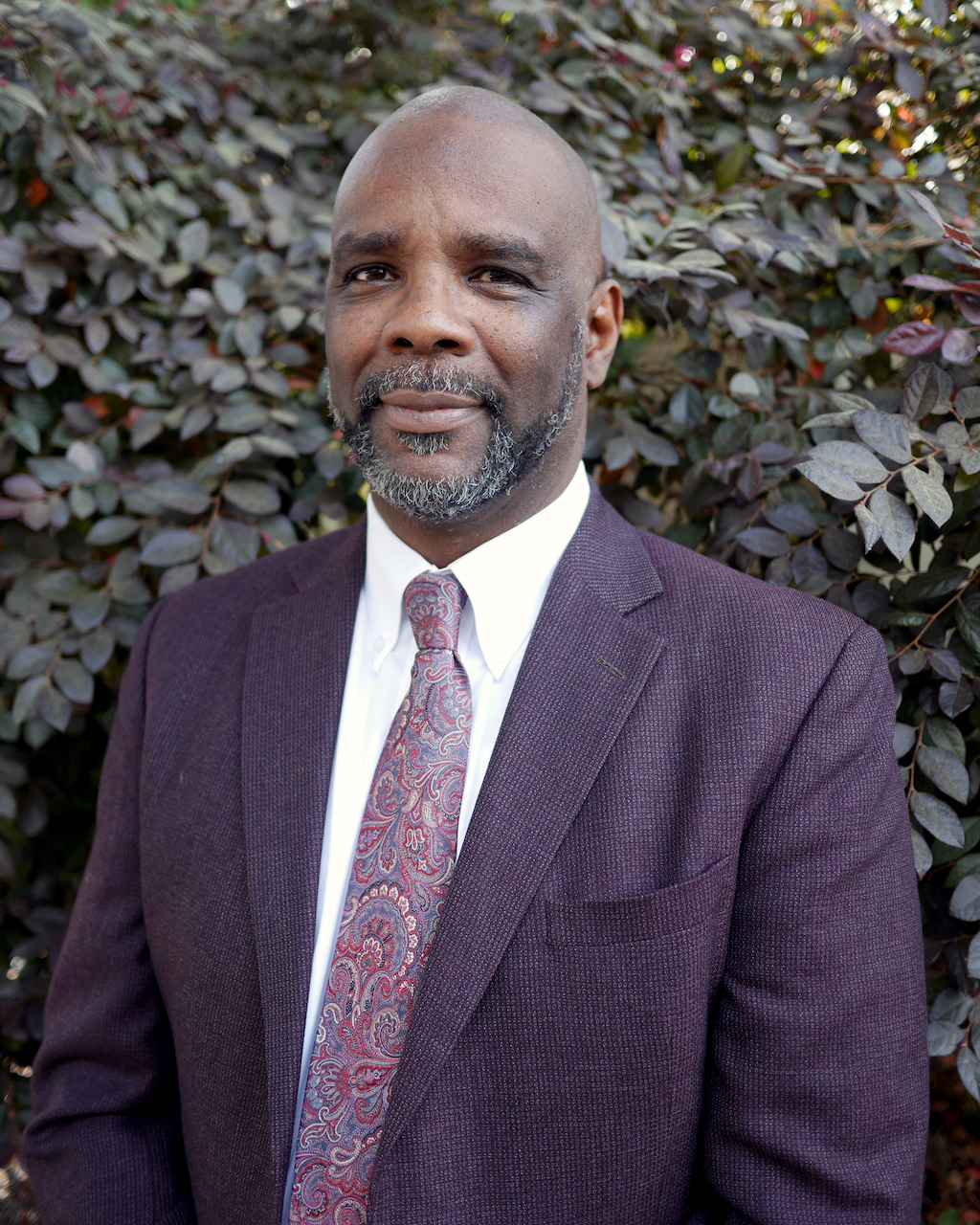 LITERACY ADVOCATE KAREEM WEAVER IS AMONG THE KEYNOTE SPEAKERS AT THE 2026 CUBE ANNUAL CONFERENCE.
The nation’s schools are grappling with a crippling literacy crisis, and school boards play a crucial role in addressing this social justice issue.
That’s the message of Kareem Weaver, a former classroom teacher, principal, program administrator, and Oakland NAACP leader who now heads FULCRUM (Full and Complete Reading is a Universal Mandate), a national nonprofit focused on ending illiteracy.
Poor reading skills are not only a classroom failure; they are one of the clearest measures of whether a public education system is delivering excellence for all its children, Weaver says. He has taken his literacy advocacy to Fortune 500 companies and prisons, college campuses and statehouses, urban, suburban, and rural school boards, and national education convenings. He is among the keynote speakers scheduled for NSBA’s Council of Urban Boards of Education (CUBE) Annual Conference from Oct. 1 to 3, in Chicago. (To learn more and to register, go to https://nsba.org/events/2026-cube-annual-conference.)
“Literacy is our greatest civil right,” says Weaver. “It’s the root of so many other things: math, science, and history, understanding the Bible and scriptures, accessing jobs and careers, starting a business, being an educated voter. You can’t really be a full member of society if you’re illiterate.”
REPORT CARD SHOWS READING WEAKNESSES
According to the most recent National Assessment of Educational Progress (NAEP) report (often called the nation’s report card), only a third of students nationwide are working at or above the NAEP Proficient level in reading in fourth (31%) and eighth (30%) grades; 35% of students in 12th grade read at or above the Proficient level. Scoring at the NAEP Proficient level means consistently understanding written text and interpreting its meaning.
An analysis by the Center for American Progress noted that “NAEP reading scores have been declining over the past decade. While the COVID-19 pandemic greatly affected schools and communities, these declines predated the pandemic and were only exacerbated by the challenges that followed. The achievement gap between low- and high-performing students continues to widen, and there is growing inequality between student groups.” Nationally, fourth grade reading scores for Black and Hispanic students have decreased, as have reading scores for students with disabilities.
INSPIRED ADVOCACY WORK
Weaver is a first-generation college graduate, having earned a bachelor’s degree from Morehouse College in psychology and Spanish and a master’s in clinical-community psychology from the University of South Carolina. At Morehouse, he co-founded Students for the Children of Incarcerated Parents (SCIP), a mentoring and tutoring program.
At Morehouse, a “real fast friend” and personal inspiration was Ennis Cosby. The late son of entertainer Bill Cosby, Ennis was diagnosed with dyslexia while an undergraduate. After receiving the appropriate diagnosis and training, he “went from being a D student to an A student,” Weaver recalls. The two shared a desire to “solve the school-to-prison pipeline,” he adds. “That was our goal. I wanted to help kids from the hood because I grew up in an urban environment, and he wanted to help kids with dyslexia.”
Ennis Cosby was murdered in 1997, the victim of a failed robbery attempt. At the time, he was enrolled in a doctoral program in special education.
Weaver’s advocacy work is featured in the 2026 documentary “Left Behind,” about efforts to create the first public school in New York City for students with dyslexia, and in the 2023 documentary “The Right to Read.” It highlights the efforts of activists, teachers, and parents to address the early-grades literacy crisis. It also examines the so-called “reading wars” controversy over the most effective way to teach reading.
“The research consensus is very, very clear on what works for teaching reading,” Weaver says, stressing that explicit, structured instruction, including phonics, is grounded in decades of empirical research. “This is not something that’s debatable anymore.”
Some educators and school systems still use other methods due to personal bias or a lack of awareness, he says. These approaches may help some students achieve grade-level reading, Weaver says, but not the majority.
BOARD WORK TO IMPROVE LITERACY OUTCOMES
School boards and superintendents play a critical role in prioritizing literacy, setting clear goals and expectations, and holding district staff accountable for academic outcomes, Weaver says. In his keynote address at this year’s CUBE Annual, Weaver plans to highlight essential work that boards should undertake, including:
· Making literacy a standing agenda item for board sessions and requiring regular updates and assessments.
· Setting literacy goals and establishing metrics so superintendents can be evaluated and held accountable for literacy outcomes.
· Ensuring alignment with research-based best practices for literacy instruction.
It isn’t discussed as much as it should be, but there are school districts and states that are making significant improvements in reading instruction and achievement, the keynote speaker says. He points out that common practices among these success stories include: a dedicated literacy leader, a research-aligned curriculum, sufficient planning time for teachers, safety nets for struggling students, strong professional development, early screening for dyslexia, alignment with teacher preparation programs, data-driven instruction, and consistent outreach to parents.
School boards must be empowered to ask commonsense questions about their district’s literacy status, Weaver says. “You don’t have to be an education expert to ask simple questions, such as, does this (curriculum) we’re about to approve have evidence that it works? What’s the evidence that it works for kids that fit our profile?
“School boards have a right to ask these questions, and I would argue, from a civil rights perspective, that they have a responsibility to do that.”
Michelle Healy is senior editor of American School Board Journal.