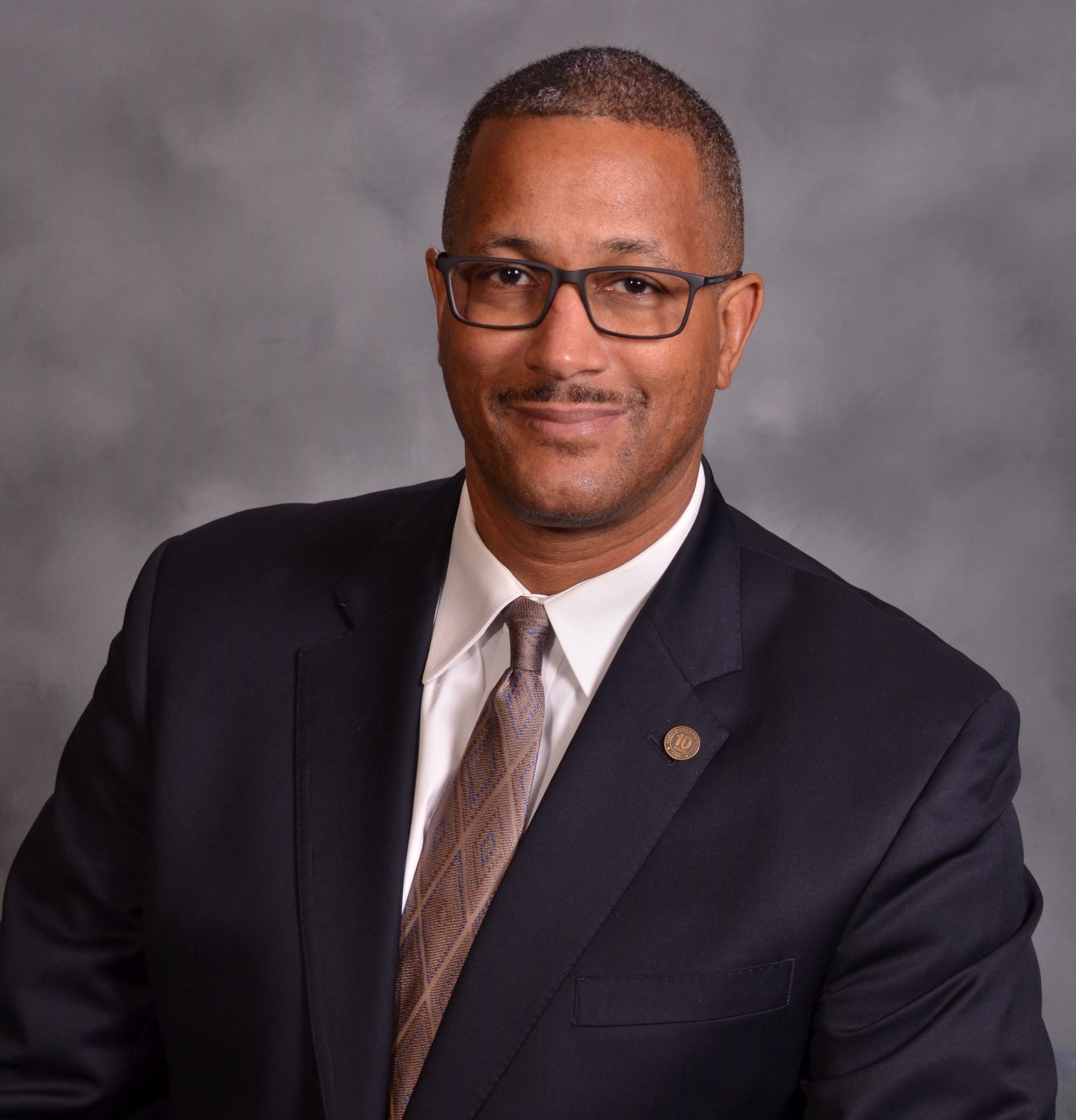
 NSBA 2026-27 President Leonard Lockhart
Federal budget cuts and persistent funding shortfalls weigh heavily on public schools. When local school districts must cover unmet federal commitments, the financial burden falls on state budgets and local taxpayers. Local school board members see the human impact of these pressures firsthand, NSBA President Leonard Lockhart writes.
September 15, 2026
Public education is the cornerstone of American opportunity. In every corner of our nation, from vibrant urban centers to small rural towns across all 50 states and territories, our public schools serve as the foundation where children discover their potential, families build stronger futures, and communities grow together.
However, local school districts face a compounding financial crossroads. Federal budget reductions and persistent funding shortfalls, most notably in core commitments such as the Individuals with Disabilities Education Act (IDEA) and vital Title programs, are straining local resources. When local school districts must cover unmet federal commitments, the financial burden falls heavily on state budgets and local taxpayers, forcing school board members to make very difficult decisions. Local school board members see the human impact of these pressures firsthand in our hometowns: deferred building maintenance, larger class sizes, classroom resources stretched thin, essential programs put at risk, and dedicated educators facing increasing uncertainty.
Children cannot be collateral damage in political divisions. To protect the 50 million students who depend on our public schools, we must unite around nonpartisan, practical policy solutions that transcend political lines. Governance in public education should never be about partisan division; it must always be about delivering effective, transparent, and equitable results for every student, regardless of their ZIP code.
Achieving this requires clear commitment from local, state, and federal leaders across the legislative and executive branches:
- Transparent Fiscal Accountability: Ensuring public tax dollars directly reach the classroom through clear, measurable oversight that builds trust with local taxpayers.
- Equitable Student Outcomes: Providing dependable, sustainable funding that equips all schools, rural, suburban, and urban alike, to support every child’s individual academic success and development.
- Comprehensive Family Support: Partnering with parents and caregivers to cultivate safe, welcoming environments where families feel valued and engaged in their children's learning.
- A Supported Educator Workforce: Investing in competitive compensation, high-quality professional learning, and classroom resources to ensure our teachers, staff, and administrators are valued and empowered to remain in the profession.
Despite the fiscal realities facing our districts, there is reason for genuine hope. Across our country, remarkable things happen in public classrooms every single day. We see dedicated teachers sparking curiosity, school boards working tirelessly to shepherd local resources, and students achieving groundbreaking milestones.
Our nation’s leaders have a profound opportunity to build on this momentum by treating education spending as a non-negotiable long-term investment, not a flexible expense. By working collaboratively across party lines and levels of government, we can establish predictable, equitable fiscal policy that respects local governance while providing every school with the tools to succeed.
Together, as local board members, state legislators, federal policymakers, educators, and parents, we can fulfill the promise of public education and deliver the bright future every child deserves.
Leonard Lockhart, the 2026-27 president of NSBA, is a member of the Windsor Board of Education in Connecticut.