The current state of civics education is troubling, but some districts are advancing civics learning for their students
As the U.S. approaches its 250th anniversary, evidence shows that the civics knowledge gap is substantial. Many Americans struggle to engage productively in an increasingly complex and polarized democracy. Although there is no single solution to these challenges, educators and school districts across the country are adopting creative approaches that connect civics education to students’ lives, communities, and democratic participation. Jinghong Cai, with NSBA’s Center for Public Education, highlights some examples.
March 23, 2026
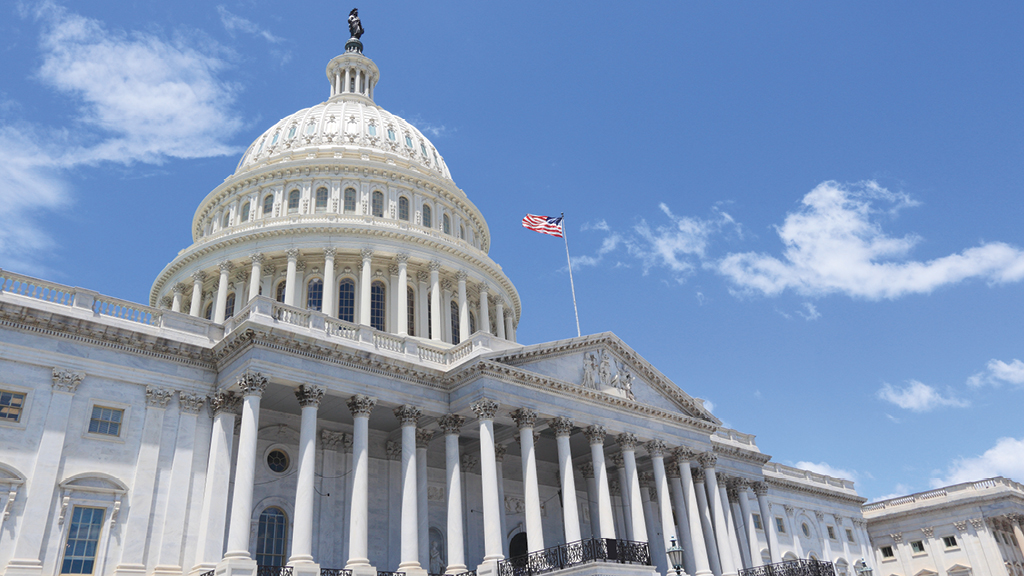 PHOTO CREDIT: TUPUNGATO/STOCK.ADOBE.COM
As the U.S. approaches its 250th anniversary in this year, we are facing a troubling reality. Political polarization is deepening, and many Americans lack basic civics knowledge. Together, these trends underscore the growing importance of strong civics education to help students and communities navigate our democratic system with understanding and respect.
The civics knowledge gap is substantial. Many Americans struggle to engage productively in an increasingly complex and polarized democracy. According to a 2024 U.S. Chamber of Commerce Foundation study, more than 70% of Americans fail a basic civics literacy quiz covering core topics such as the three branches of government, the number of Supreme Court justices, and other foundational features of U.S. democracy. This shortfall is not merely academic; it undermines public trust, fuels division, and weakens democratic norms.
Research suggests that civics education can help counter these trends. Exposure to civics knowledge reduces the negative effects of partisan polarization by more than 20%, according to a 2025 report by Melek Hilal Eroglu and coauthors. Yet despite widespread exposure to civics in high school, only 1 in 4 Americans feels confident explaining how their government works. As Danielle Allen, Paul Carrese, and Louise Dubé argue in their 2025 article published by the National Association of State Boards of Education, “For many decades, public schools have failed to prepare young Americans for self-government, leaving the world’s oldest constitutional democracy in grave danger, afflicted by extremes of cynicism and nostalgia.”
Such criticism, however, requires careful context. Civics learning extends beyond formal instruction in government or history. It is fostered through intentionally designed democratic education that helps students develop character, civic dispositions, and habits of participation. As one rural school district superintendent observed in a 2010 Teaching Tolerance article, the true measure of civics education appears after graduation, when students continue to demonstrate tolerance, engagement, and a commitment to lifelong learning. In his district, graduates are registered voters, active participants in local politics and civic organizations, and regular community volunteers. As the superintendent concluded, students had developed “the habits of heart and mind that democracy requires, and that our communities need.”
MANAGING CIVICS LEARNING AMID POLITICAL POLARIZATION
Researchers trace the broader decline in civics education to the 1960s, when events such as the Vietnam War and the Watergate scandal eroded public trust in government. During this period, civics education was increasingly criticized as a form of assimilation or “cultural imperialism,” as noted by a 2024 Sandra Day O’Connor Institute policy brief. In response, many high schools scaled back civics instruction, including eliminating long-standing requirements for multiple courses in government and civics.
Today, most school districts include civics within history or social studies courses rather than offering it as a stand-alone subject (Center on Reinventing Public Education, 2025). District leaders generally emphasize a balanced approach that combines civics knowledge with experiential learning. They rely on state standards and requirements for guidance and resources, though these frameworks can also limit local flexibility. Urban districts are more likely than suburban or rural districts to have formal civics standards, graduation requirements, assessments, and aligned curricula.
Across multiple data sources, the current K-12 civics education landscape shows:
- Civics instruction concentrated in high school: About 74% of school districts provide explicit civics instruction in high school, compared with just 36% in elementary school (Center on Reinventing Public Education, 2025). However, student-reported data from the Nation’s Report Card (NAEP, 2022) suggest more limited exposure: only 49% of eighth-grade students said they had a class primarily focused on civics or U.S. government, and just 29% reported having a teacher whose main responsibility is teaching civics (Liz Willen, 2024).
- Emphasis on foundational knowledge: A majority of district leaders (56%) report that the primary focus of civics education is basic knowledge—how government works and the rights and responsibilities of citizens (Center on Reinventing Public Education, 2025).
- Incomplete state requirements: Only 26 states require course materials and standards across all five core areas: democratic systems; the U.S. Constitution and Bill of Rights; civic participation; state and local voting rules; and media literacy (Kara Yorio, 2020).
- Political pressure in classrooms: Nearly 88% of civics teachers said that “fear of controversy” was a primary challenge to teaching civics, while about 71% said that “fear of pushback from parents/community” was a primary challenge (Sandra Day O’Connor Institute, 2025).
Together, these findings highlight both unequal access to civics learning and the increasing constraints educators face in politically polarized environments.
SCHOOL DISTRICT CIVICS INNOVATIONS
Although there is no single solution to political polarization, school districts can take meaningful action by strengthening civics learning. Across the country, educators and school boards are adopting innovative approaches that connect civics education to students’ lives, communities, and democratic participation. The examples below illustrate how districts are advancing civics learning in practice.
- Oklahoma City Public Schools integrates civics education into creative, service-oriented art projects. Using simple materials—such as paper, paint, and scissors—students engage in hands-on activities that allow them to contribute to their communities in ways that reflect their interests and abilities (Carrie Snyder-Renfro, 2025).
- The School District of Philadelphia encourages students to explore real-world questions drawn from their own experiences, such as neighborhood poverty or community violence. In civics classes, teachers use these questions to examine the roles of local, state, and federal governments and to emphasize the responsibilities of citizenship. The district has made a concerted effort to ensure students graduate with a clear understanding of how government works and how citizens can participate effectively (Dale Mezzacappa, 2025).
- In North Carolina, educators use a variety of strategies to spark student interest in civics learning and connect historical and contemporary politics to students’ concerns. One elementary teacher invited local leaders—including the mayor, city council members, and the school superintendent—to a Resource Day, giving third graders a direct opportunity to engage with public officials. Years later, students still recall the experience as meaningful (Sarah Michels, 2025).
- In a small rural district in Ohio, student democracy is embedded in school governance. Students share equal voice with faculty in teacher hiring, hold seats on decision-making bodies—including ex officio seats on the local school board—and take responsibility for student events and programs such as intersession activities and senior project night (George Wood, 2010).
- In Tennessee, districts are implementing action civics, an approach in which students identify community issues they care about and work—under teacher guidance—to develop and implement public policy solutions. State law reinforces this approach by requiring students to complete a project-based civics assessment once in grades 4–8 and again in high school.
- In Florida, the Osceola School Board has paired routine governance with intentional efforts to elevate civics education. Alongside approving its tentative budget, the board issued public proclamations recognizing heritage, civil rights, Constitution Day, and Celebrate Freedom Week, signaling the importance of civics literacy across district classrooms.
Taken together, these examples demonstrate how educators and district leaders can use innovative, locally grounded approaches to reinforce civic values, connect instruction to community life, and communicate the importance of civics learning to students and the broader public.
CHALLENGES: LIMITED FUNDING AND STAFFING FOR CIVICS EDUCATION
Looking ahead, civics education in public schools faces persistent constraints related to funding and staffing. In a 2025 national survey by the Center on Reinventing Public Education, nearly one-third of districts (31%) cited lack of funding as a barrier to offering more civics learning, while nearly one-fourth (22%) pointed to a shortage of in-school staff who can lead civics instruction. These capacity gaps limit districts’ ability to deliver consistent, high-quality civics education.
To address these challenges, federal and state policymakers must strengthen funding streams and expand teacher preparation and professional development in civics education. Without sustained investment in both educators and instructional programs, efforts to rebuild civics knowledge and public trust will remain uneven and incomplete. As one scholar cautions, “No political regime can long endure without finding a way to form citizens or subjects who are able to uphold or at the very least accept its values and institutions” (Daniel Stid, 2025). Civics education, therefore, is not an optional enrichment; it is a foundational investment in democratic stability.
Jinghong Cai, Ph.D. is the senior research analyst of NSBA’s Center for Public Education.